Main Content
Written by Irene F., Rutgers Master Gardener of Somerset County
Fruit Tree Care – How it’s done at Rutger’s Snyder Research Farm.
It’s not just pruning, thinning, and harvesting.
Caring for the base of your fruit trees is just as important to health and productivity of a fruit tree as pruning and thinning. A well-maintained tree base not only enhances the tree’s ability to absorb nutrients and water but also protects it from potential threats such as pests, diseases, and competition from weeds.
The base of a fruit tree serves as the foundation for its overall health. This area includes not only the trunk of the tree, but the soil and the roots under the tree’s canopy. Roots need nutrient-rich and well-aerated soil to grow optimally. Maintaining a clean base minimizes insect/pest infestation and fungal infections. A properly cared-for base allows the tree to take up water and other essential resources effectively and without competition.
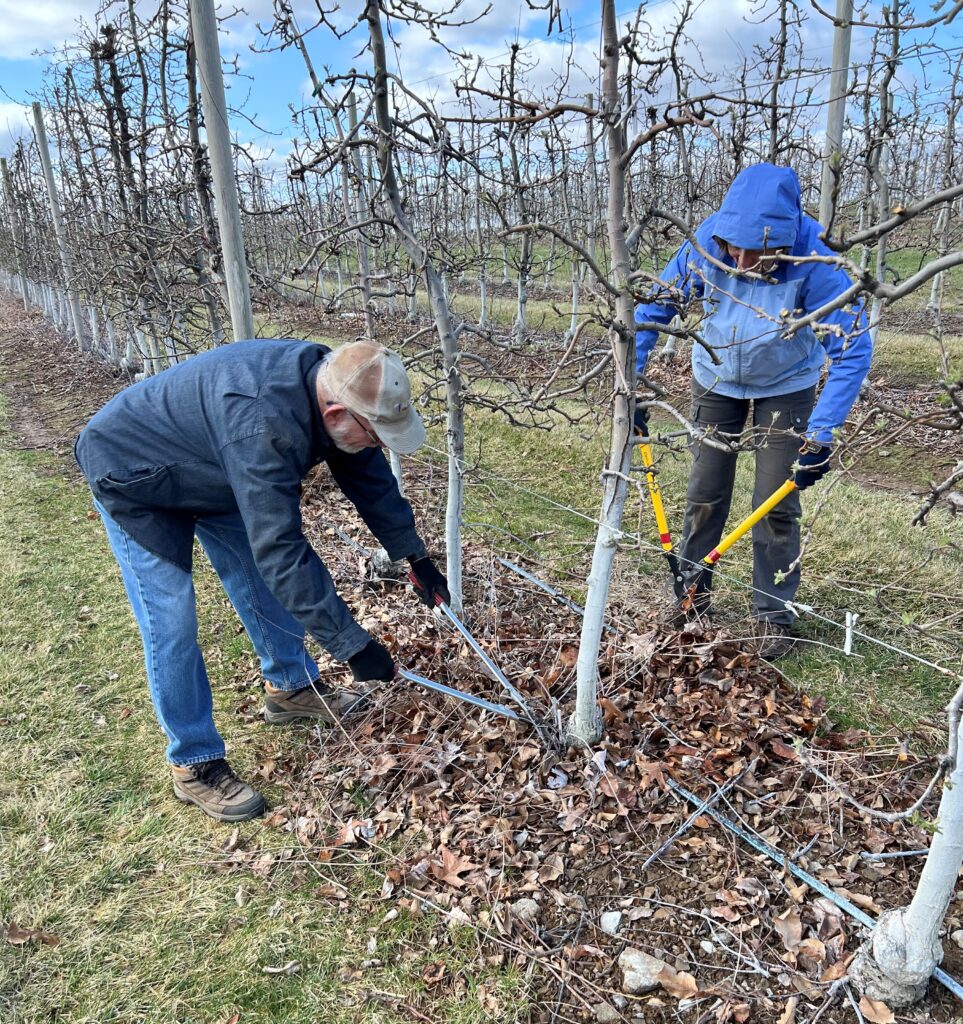
At Snyder Research Farm, there are many rows and many varieties of fruit trees to maintain. Weeding and removing the competing grasses from the base is not a realistic task for extensive orchard growing. Therefore, herbicides are used in a strip about 3 or 4 feet wide along the base of the trees Each year, however, volunteers cut back mulberry tree and fruit tree suckers that compete with the tree, remove branches and pruning debris, as well as fallen fruits and leaves that may attract pests.
For home orchard tees, mulch helps retain soil moisture, regulate temperature, and suppress weeds. Use organic mulch such as wood chips, straw, or bark in 2–4-inch layers around the base. But leave a 6-inch area free between the trunk and mulch layer to prevent rotting.
Occasional soil tests to determine pH levels and nutrient deficiencies. Amending for a neutral soil – pH 6.0 – 7.0 may be necessary.
Fertilization in early Spring and late Fall around the base of the tree and avoiding the trunk is a beneficial practice.
Watering fruit trees, particularly during droughts is critical. Provide 1 – 2 inches of water per week using drip irrigations or soaker hoses.
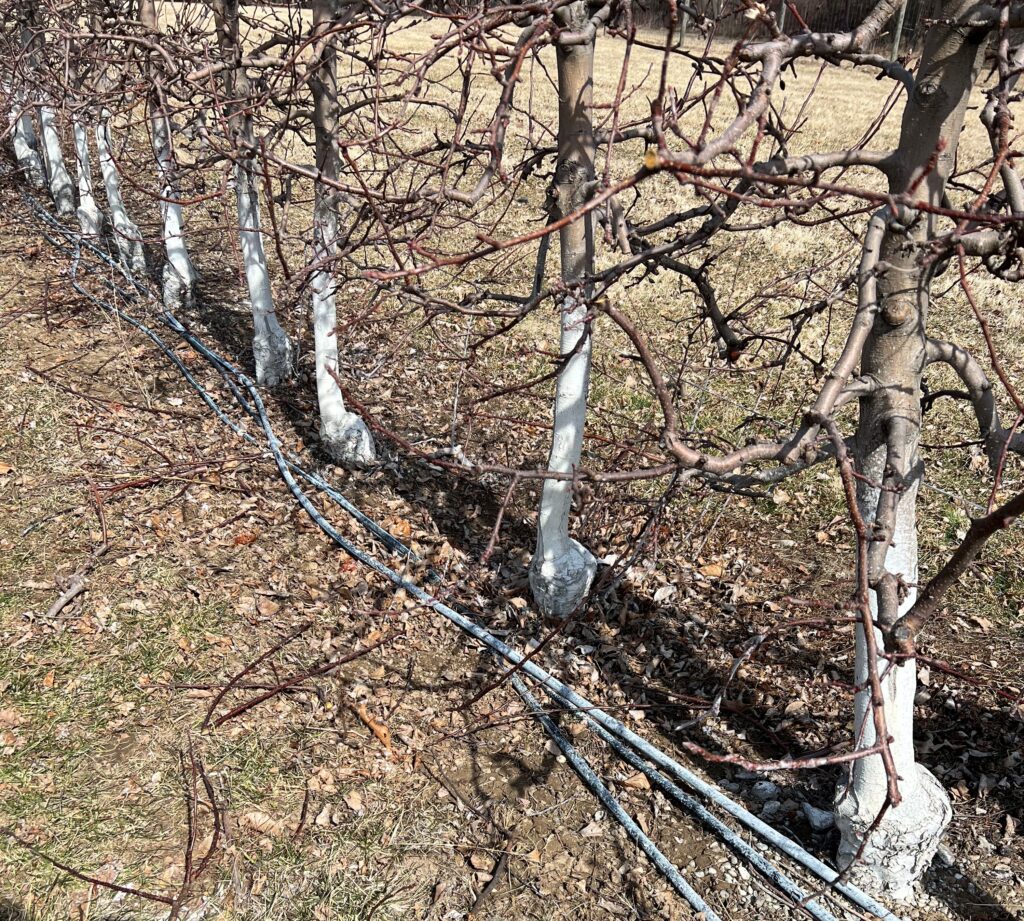
Check for common fruit tree pests (ants, borers and aphids) and fungal growths that could indicate diseases and use appropriate IPM practices if necessary. Fungicides prevent or treat fungal infections. Preventative measures to ward off larger pests include the installation of tree guards. Tree guards also protect against frost damage in the Winter. At Snyder Farm, the base of the tree’s trunks are painted white to protect the tree from pests.
By focusing on diligent care of the tree base—through proper mulching, soil monitoring, pest management, and routine clean-up—you’re investing in the long-term productivity and resilience of your fruit trees. Whether you’re tending to a backyard orchard or managing rows at a research farm, these foundational practices go a long way toward ensuring vigorous growth and bountiful harvests year after year.