Main Content
Spotlight on: Carrie Lippincott
Written by Mousumi P., Rutgers Master Gardener of Somerset County
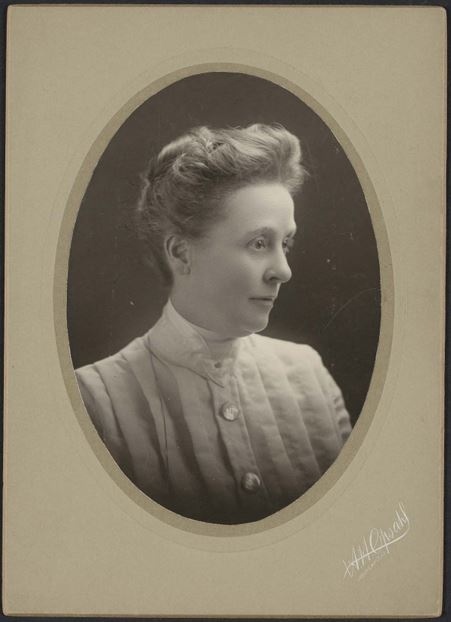
In honor of Women’s History Month, our spotlight is Carrie Lippincott (1860-1941) “The Pioneer Seedswoman of America” for her early mail order seed company and innovative marketing approaches.
Originally from NJ, Lippincott moved to Minnesota in the late 1880’s and worked for her brother-in-law at a Minneapolis seed house to support her family. In 1891, she established her own mail order seed business “Miss C.H. Lippincott” focusing on flower seeds and sales strategies for women buyers.
At a time where seed catalogues and packets were plain, informational only and geared towards male farmers, Lippincott featured beautiful, colorful aesthetic cover art for her catalogues and seed packets showcasing well adorned women and children amongst blooming flowers and garden scenes. She posted small but eye catching ads in magazines and newspapers not to buy her flower seeds, but to receive her free seed catalogue. Her seeds were well priced at pennies per packet. But she created incentives to buy more- from free 15 cents worth of seeds for 50 cent purchases to a free rose plant with larger purchases. Customers could receive her free booklet, Floral Culture, with detailed instructions for growing hundreds of flower varieties. She included messages of gratitude, confidence and personal stories to further connect to her female audience. She managed all aspects of her business-employing staff of twenty-five female clerks and engaging housewives to grow seed stock on their farms and backyard gardens.
Lippincott’s business grew from 6,000 orders in 1891 to 150,000 orders in 1896 (from as far as Japan, India and South Africa). In 1898, a quarter of a million copies of the free annual catalog were shipped. Inventory expanded by adding vines and roses in 1903 and vegetable seeds in 1907. But her success came with challenges- competition from other “seedswomen” and a lawsuit in 1898 from her brother-in-law claiming half her business. She quickly overcame these challenges and continued her business with the last seed catalog publication in 1918, afterwards focusing on an instore flower shop business. Amongst her many accomplishments and legacies, Carrie Lippincott’s beautiful catalogs and seed packets have become collectible items and preserved in many archives including the Smithsonian.
Sources:
https://www.mnhs.org/mnopedia/search/index/person/lippincott-carrie-h-1860-1941
https://blog.biodiversitylibrary.org/2015/03/leading-ladies-in-world-of-seeds-part.html